
Free SEM Specialist Job Description Templates
Free SEM specialist job description templates for paid search, PPC, and Google Ads roles, plus an honest hire-versus-outsource guide. Download as DOCX.

An SEM specialist plans, launches, and optimizes paid search advertising to turn ad spend into measurable results: keyword research, campaign structure, bidding, ad copy, and the metrics that tie spend to leads and sales. The title shows up in a few flavors, general SEM, PPC or paid search, and Google Ads specifically, and the version you hire for depends on how you advertise and how big your budget is.
At FirstHR, we build hiring and onboarding tools for smaller companies, including the businesses making their first paid-search hire without a full marketing department. These six templates cover the role across its common forms, and below them is an honest look at whether you should hire in house at all or start with a freelancer or agency.
- Sign the offer letter
- Sign the employee handbook
- Workplace Safety course
What an SEM Specialist Does
An SEM specialist plans and runs paid search campaigns to drive measurable results from a company's advertising budget. The core work is keyword research, campaign and ad-group structure, writing and testing ad copy, managing bids and budgets, setting up conversion tracking, and reporting on cost per click, conversions, and return on ad spend. The role is hands-on and data-driven, focused on getting more customers or sales from every dollar.
The closest federal occupation is market research analysts and marketing specialists, which includes a dedicated specialty for search marketing strategists, a Bright Outlook occupation covering paid search and SEO titles. The role appears under a few names, which is why this page gives you several versions plus a clear hire-versus-outsource guide.
Which Template Should You Use?
Pick the template by how you advertise and how senior the role is. The core structure is the same across all six, but each emphasizes the focus, channel, and language that fit a specific kind of paid-search hire. Use this guide to choose.
6 Free SEM Specialist Job Description Templates
Download all six as separate Word files in one ZIP, or copy individual templates. Each follows the same structure: company and job summary, key responsibilities, qualifications, pay and classification, and how to apply, with an EEO statement. Fill in the brackets and post.
Template 1: SEM Specialist (Standard)
The baseline paid-search role: plan, launch, and optimize campaigns, own keyword research and bidding, and report on cost per click, conversions, and return on ad spend.
Template 2: Search Engine Marketing Specialist
The same core role framed around search marketing as a whole: paid campaigns plus coordination with organic search and SEO efforts.


Template 3: SEM Specialist (Entry-Level / Junior)
An accessible version for someone starting in paid search: supports campaigns, research, and reporting while learning strategy. Hire for analytical thinking and curiosity.
Template 4: PPC / Paid Search Specialist
Framed around pay-per-click across channels: campaign strategy, bidding, creative, and optimizing toward cost per acquisition and return on ad spend.
Template 5: Google Ads Specialist
Focused specifically on Google advertising across search, shopping, and display. Often the most relevant version for a local business or e-commerce store.
Template 6: SEM Specialist (Small Business / Agency)
Written for a company hiring its first paid-search person without a full marketing department: a wear-many-hats role that owns paid search and explains it plainly.
SEM Specialist Duties and Responsibilities
SEM specialist duties cluster into four areas: campaign management, creative and testing, measurement, and strategy and tools. A strong job description picks the specific responsibilities from each area that match your focus rather than listing every possible task.
For a Google Ads role, the campaign and platform duties dominate; for a senior or small-business role, strategy and budget ownership carry more weight.
What to Include in the Job Description
Every strong SEM specialist job description includes the same core sections, but the move that matters most is naming the exact focus, general SEM, PPC, or Google Ads, since each attracts a different candidate.
| Weak bullet | Strong bullet |
|---|---|
| Run ad campaigns | Plan, launch, and manage paid search campaigns end to end |
| Do keyword research | Research keywords and structure campaigns and ad groups |
| Write ads | Write and A/B test ad copy and landing pages |
| Track results | Track CPC, conversions, and return on ad spend |
| Marketing experience | Hands-on experience managing paid search campaigns |
Specific, measurable duties attract people who can do the work. Keep the language neutral and inclusive too, since the EEOC prohibits job advertisements that show a preference based on protected characteristics, and the SHRM job description tools cover the standard sections of a job description.
Hire In House or Outsource?
Before you write the posting, answer one question: should you hire a dedicated paid-search person at all, or start with a freelancer or agency? For many small businesses, outsourcing is the smarter first move, and a full-time hire only pays off at a certain scale.
The honest rule of thumb: outsource while your ad spend and complexity are low, and bring the role in house when paid search becomes central enough to justify a full-time owner of it. If you have decided to hire, the templates above fit; if you are still deciding, that decision matters more than the wording of the posting.
SEM Specialist Salary
SEM specialist pay varies by experience, location, and company type, so anchor your range to the specific level. Government data sets the baseline for the broader occupation.
Entry-level paid-search roles often run in the mid $40,000s to high $50,000s, while senior specialists reach into the $80,000s. Some figures run higher because they fold bonuses and equity at large tech employers into total pay. Set your base range to the level and platforms you need, anchored to government data and your local market, and publish it where required.
FLSA and Classification
Whether an SEM specialist is exempt from overtime depends on the actual duties and pay, not the title, and it can land on either side of the line, which most templates ignore.
The practical step: confirm the classification against the specific role and pay rather than assuming a marketing title is automatically exempt, especially for junior or contract hires. For the underlying rules, the exempt versus non-exempt guide and the Fair Labor Standards Act overview explain how the tests work, and the Department of Labor FLSA page is the primary source.
Requirements and Skills
SEM specialist requirements weight skills over credentials. The core is hands-on experience running paid search campaigns, strong analytical skills and comfort with performance data, an understanding of keywords, bidding, and conversion tracking, and clear reporting.
A bachelor's degree in marketing or a related field is commonly listed as preferred rather than required, and many strong candidates are self-taught or come from adjacent roles. The most relevant credential is a Google Ads certification, which signals platform proficiency. For entry-level hires, weight the decision toward analytical thinking, curiosity, and demonstrated interest, since platform skills can be trained. For senior hires, weight it toward a track record of managing budgets and improving return on ad spend.
From Hiring to Onboarding
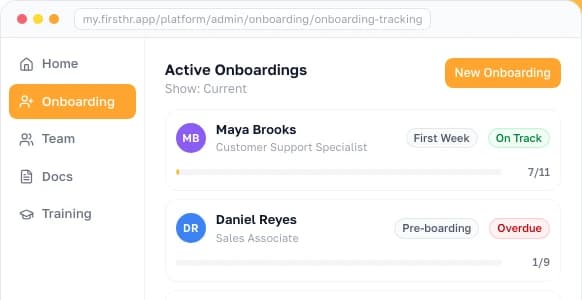
The job description is step one. Once a candidate accepts, the same document becomes the basis for the offer and a structured onboarding, which matters for a paid-search hire because they need access to your ad accounts, analytics, and business context before they can produce results.
Confirm the offer in writing, collect the new hire paperwork, grant access to ad and analytics accounts carefully, and run a first-weeks plan covering your goals, budget, and reporting expectations. FirstHR connects the offer, paperwork, e-signatures, and onboarding workflow in one place, so a smaller company can manage the full process directly. FirstHR is an onboarding and HR platform, not an advertising or analytics tool, and it does not run payroll, so connect those separately. Applicant tracking is coming soon.

Frequently Asked Questions
What does an SEM specialist do?
An SEM (search engine marketing) specialist plans, launches, and optimizes paid search advertising to drive measurable results from a company's ad spend. The core work includes keyword research, building and structuring campaigns, writing and testing ad copy, managing bids and budgets, setting up conversion tracking, running A/B tests on ads and landing pages, and reporting on metrics like cost per click, conversions, and return on ad spend. The role is hands-on and data-driven, focused on getting more customers or sales from every advertising dollar. SEM is primarily about paid search, though many specialists also understand how paid and organic search work together. In smaller companies the role often extends to coordinating with freelancers or agencies and explaining performance in plain terms to a non-marketing owner.
What is the difference between SEM, PPC, and SEO?
These terms overlap but mean different things. SEM, or search engine marketing, refers to marketing on search engines, and in practice it usually means paid search advertising, with some sources using it as an umbrella that includes both paid and organic. PPC, or pay-per-click, is the advertising model where you pay each time someone clicks your ad, so PPC and paid search are largely the same thing in everyday use. SEO, or search engine optimization, is the practice of earning unpaid, organic search rankings through content and technical work, with no ad spend. The simplest way to think about it: SEM and PPC are about paying for search visibility, while SEO is about earning it. A specialist may focus on one or span several, which is why naming the exact focus in your job posting matters.
Should I hire an SEM specialist in house or outsource to a freelancer or agency?
It depends on your ad spend, how central paid search is to your business, and how much control you want. As a general rule, a freelancer or contractor makes sense when your monthly ad budget is modest, often under about $5,000, or your need is part-time or project-based. An agency suits owners who want paid search handled hands-off across multiple channels and are comfortable paying a management fee on top of ad spend. A dedicated in-house hire becomes worth the salary when your spend is larger or growing, often past roughly $10,000 a month, when paid search is core to how you acquire customers, or when you want someone who owns results daily inside your business. Many small businesses start with a freelancer and bring the role in house as spend and complexity grow. This is general guidance, not a strict rule.
What should an SEM specialist job description include?
A strong SEM specialist job description names the exact focus first, general paid search, PPC, or Google Ads specifically, so the right candidates apply. Include a short company summary, a job summary, and responsibilities grouped into campaign management, creative and testing, measurement, and strategy and tools. Add required and preferred qualifications, the reporting line, the classification, and a realistic pay range. Useful specifics include the platforms you advertise on, your rough ad budget or scale, any certifications you prefer, and whether the role is full-time, part-time, or contract. For a smaller company, it also helps to be honest that the role wears several hats and reports to a non-marketing owner. Close with an equal opportunity statement and clear apply instructions. This is general information, not legal advice.
How much does an SEM specialist make?
Pay varies by experience, location, and company type. The closest federal occupation, market research analysts and marketing specialists, reported a median annual wage of $76,950 in May 2024, with the lowest 10 percent under about $42,000 and the highest 10 percent over about $144,000. Role-specific sources place the typical SEM specialist median a bit lower, commonly in the high $50,000s to low $70,000s, with entry-level roles often in the mid $40,000s to high $50,000s and senior specialists into the $80,000s. Some figures run higher because they include bonuses and equity at large tech employers, which inflates total pay above base. For a posting, set a base range anchored to government data and your local market, and adjust for the seniority and platforms you need. This is general information, not legal advice.
Is an SEM specialist exempt or non-exempt under the FLSA?
It depends on the actual duties and pay, not the title. An SEM specialist working in an advertising or marketing function, paid on a salary basis above the federal threshold, and exercising real discretion and independent judgment on significant matters may qualify for the administrative exemption and be exempt from overtime. However, many paid-search roles are hourly, contract, or junior positions where that discretion test is not clearly met, in which case the role is non-exempt and owed overtime for hours over 40 in a week. Because the analysis turns on the specific duties and salary rather than the job title, confirm the classification for the particular role you are hiring. The federal salary threshold and exemption tests are set by the Department of Labor. This is general information, not legal advice.
What qualifications and certifications does an SEM specialist need?
Skills generally matter more than formal credentials for this role. The core requirements are hands-on experience running paid search campaigns, strong analytical skills and comfort with performance data, an understanding of keywords, bidding, and conversion tracking, and clear reporting. A bachelor's degree in marketing or a related field is commonly listed as preferred rather than required, and many strong candidates are self-taught or come from adjacent roles. The most relevant certification is a Google Ads certification, which signals platform proficiency, and analytics certifications are a plus. For entry-level hires, weight the decision toward analytical thinking, curiosity, and demonstrated interest, since the platform skills can be trained. For senior hires, weight it toward a track record of managing budgets and improving return on ad spend. This is general information, not legal advice.
Do small businesses really need a dedicated SEM specialist?
Often not at first. Many small businesses run paid search through a freelancer or agency until the spend and complexity justify a full-time hire. A dedicated SEM specialist becomes worth it when paid search is a primary way you get customers, when your ad budget is large enough that better management clearly pays for the salary, or when you want someone embedded in the business who owns results daily. Below that, outsourcing is usually the smarter use of money. If you are at the point of making your first paid-search hire, the small business version of the template is written for exactly that: a wear-many-hats role that owns paid search and reports to a non-marketing owner. Decide based on your spend and how central paid search is, not on the assumption that you must hire. This is general information, not legal advice.
Make HR the easy part of running your business
Onboarding, e-signatures, training and core HR in one place. Up and running in 5 minutes.
- 7-day free trial
- No credit card required
- Cancel anytime