
Free Surgical Tech Job Description Templates
Free surgical tech job description templates for surgery centers and practices: standard, ASC, hospital, certified, and specialty. Download as DOCX.

Surgical Tech Job Description Templates
5 free templates by setting. Download as DOCX or copy-paste.
A surgical technologist keeps the operating room safe and the procedure moving, and hiring the right one matters as much for a small ambulatory surgery center as for a large hospital. The job description has to make the setting, the scope, and the certification requirements clear, because a surgical tech is a credentialed allied-health role with specific qualifications. A precise posting filters for qualified, properly certified candidates and saves time for a center without a dedicated HR team.
At FirstHR, we build for small surgery centers and practices that hire without an HR department, where the administrator or practice manager writes the posting themselves. The five templates below cover the most common settings that hire surgical techs: a standard version plus ambulatory surgery center, hospital, certified (CST), and specialty. Each is ready to use. Fill in the bracketed fields, adjust to match your facility, and post.
What Is a Surgical Tech Job Description?
A surgical tech job description is a document that explains the role's purpose, surgical responsibilities, certification requirements, and pay so you can post a job and attract qualified candidates. It typically covers a job summary, responsibilities, required education and certifications, the setting, the pay structure, and how to apply. The SHRM job description tools describe a job description as a plain-language tool that explains the tasks, duties, and responsibilities of a position, and that standard applies whether you are a hospital system or a single surgery center.
For a surgical tech specifically, the document carries extra weight on requirements, because the role calls for completion of an accredited program and often certification that cannot be skipped. Because the role spans hospitals, ambulatory surgery centers, and specialty practices, the most important job of the description is to make the setting and credentials unmistakable.
Which Template Should You Use?
Pick the template that matches your setting and the kind of surgical tech you need. The core structure is the same across all five, but each one emphasizes the responsibilities, requirements, and language that fit a specific environment. Use this guide to choose.
5 Free Surgical Tech Job Description Templates
Download all five as separate Word files in one ZIP, or copy individual templates. Each one follows the same structure: employer overview, job summary, responsibilities, requirements and qualifications, compensation, and how to apply. Fill in the brackets before you post.
Template 1: Surgical Tech (Standard)
The universal baseline. OR prep, sterile field, instrument handling, and team support. Use this if your role does not fit a specific setting.
Template 2: Ambulatory Surgery Center
Adds fast room turnover, versatility, and predictable daytime hours. Built for the smaller outpatient setting where one tech does more.
Template 3: Hospital / OR
Adds varied specialties, larger teams, and shift or on-call coverage. For hospital operating-room roles across procedures.
Template 4: Certified Surgical Technologist (CST)
Requires current CST or TS-C certification. For employers that mandate a credentialed, experienced surgical tech.
Template 5: Specialty (Ortho / Cardiovascular)
Adds specialty instruments, complex cases, and subspecialty knowledge. For practices and centers focused on a surgical specialty.
Surgical Tech Duties and Responsibilities
Surgical tech duties follow the flow of a procedure, from preparation through turnover. A good job description picks the specific duties that apply to your setting rather than listing every possible task. These are the responsibilities most often expected of the role.
The mix shifts by setting: an ASC tech weighs toward fast turnover and supply management, while a hospital tech weighs toward varied specialties and call coverage.
Technologist vs Technician vs Tech
The titles overlap and cause confusion, so it helps to know how they relate before you write the posting. They generally refer to the same role, with differences in formality and certification labels.
| Term | Common use | Formal title | Certification label |
|---|---|---|---|
| Surgical technologist | |||
| Surgical tech (shorthand) | |||
| Surgical technician | |||
| Certified Surgical Technologist (CST) | |||
| Tech in Surgery-Certified (TS-C) |
Surgical technologist is the formal title used by the BLS and professional bodies, surgical tech is the common shorthand, and surgical technician is used less often for the same work. The certifications add their own labels: CST from the NBSTSA and TS-C from the NCCT. For the broadest reach in a posting, use surgical technologist or surgical tech, then name the specific certification you require.
Requirements and Certifications
A surgical tech role carries education and certification requirements, so the requirements section matters more here than in most job descriptions. State them clearly so only qualified candidates apply.
| Requirement | What it means |
|---|---|
| Accredited program | Completion of an accredited surgical technology program |
| CST (NBSTSA) | Certified Surgical Technologist credential, requires continuing education |
| TS-C (NCCT) | Tech in Surgery-Certified credential, an alternative certification |
| BLS certification | Current Basic Life Support certification, commonly required |
| State regulation | Some states regulate the role; check your state's rules |
Decide whether certification is required or preferred for your role and state it explicitly. Keep the rest of the posting neutral and inclusive, since the EEOC prohibits job advertisements that show a preference based on protected characteristics. For recognized tasks and skills, the O*NET profile for surgical technologists lists the standard responsibilities of the role.
Surgical Tech Salary
Set your pay using market data, adjusted for setting, certification, and location. Certified and specialized techs tend to earn more, and rates vary across hospitals, ASCs, and specialty practices.
Position your range against the setting and certification level you require: a certified or specialty tech sits higher than an entry-level role. Always state the pay structure in your posting. Pay transparency is now legally required in many states, and a clear rate attracts more qualified candidates as outpatient surgery and ASC volume continue to grow. Employment and wage rules fall under federal and state law, so review the basics in the Department of Labor FLSA standards when you classify the role.
Hiring a Surgical Tech for an ASC or Small Practice
Large hospitals have HR teams, recruiters, and standardized onboarding. An ambulatory surgery center or physician-owned surgical practice usually has none of that, so the administrator or practice manager handles hiring directly. The clinical requirements are the same, but the setting and process differ. Here is how to approach the posting.
From Hiring to Onboarding
The job description is step one. Once a candidate accepts, the same document becomes the foundation for the offer and the onboarding plan. A surgical tech needs prompt onboarding because they handle sterile technique and patient safety from early on, so getting them set up correctly protects patients and the center.
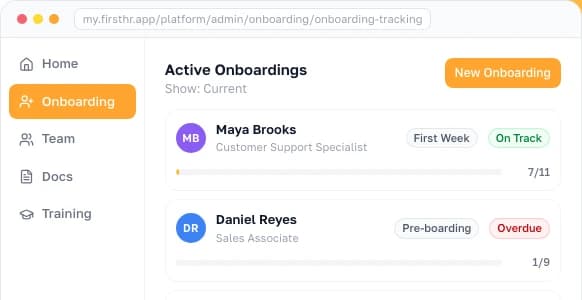
Collect signed paperwork, verify and store certification documents with their expiration dates, deliver required HIPAA and OSHA bloodborne-pathogen training, and set up systems and OR orientation before the first case. Once you have your offer ready, an onboarding template gives your new tech a structured start, and the employment contract template covers the agreement if you need one. FirstHR handles the offer, document storage, certificate storage, e-signature, and onboarding workflow in one place, so an ASC or small practice can manage the HR side of bringing on a tech without a dedicated HR department. It covers HR onboarding rather than clinical provider credentialing, which a surgical tech, as an allied-health role, does not require in the way a billing provider would.
Frequently Asked Questions
What does a surgical tech do?
A surgical technologist, often called a surgical tech or scrub tech, helps ensure that surgical procedures run safely and smoothly. Core duties include preparing the operating room, setting up sterile instruments and supplies, maintaining the sterile field during surgery, passing instruments to the surgeon, anticipating the team's needs, counting instruments and sponges, and handling specimens. They work under the supervision of the surgeon and as part of the surgical team. The exact scope depends on the setting, whether a hospital operating room, an ambulatory surgery center, or a specialty practice. A clear job description tells candidates which setting and responsibilities the role involves.
What should a surgical tech job description include?
A strong surgical tech job description includes a short job summary, the surgical responsibilities, required education and certifications, the setting, the pay structure, and how to apply. Responsibilities should be concrete: prepare the operating room, maintain the sterile field, and pass instruments. Always state the credential requirements clearly, including completion of an accredited surgical technology program and any required or preferred certification such as CST, TS-C, or current BLS. Some states regulate the role, so name your requirements precisely. Specifying the setting, hospital, ASC, or specialty, helps the right candidates self-select.
What is the difference between a surgical technologist, technician, and tech?
The terms are largely interchangeable in everyday use. Surgical technologist is the formal title used by the U.S. Bureau of Labor Statistics and most professional bodies. Surgical tech is the common shorthand, and scrub tech is another informal term. Surgical technician is used less often and sometimes informally, though the work is the same. The certifications add their own labels: the NBSTSA awards the Certified Surgical Technologist (CST) credential, while the NCCT awards the Tech in Surgery-Certified (TS-C) credential. When you post a job, use surgical technologist or surgical tech for the broadest reach, and name the specific certification you require.
What certifications does a surgical tech need?
Most surgical tech roles require completion of an accredited surgical technology program, and many require or prefer certification. The two main credentials are the Certified Surgical Technologist (CST), awarded by the NBSTSA, and the Tech in Surgery-Certified (TS-C), awarded by the NCCT. Both require continuing education to maintain. Current BLS (Basic Life Support) certification is also commonly required. Some states regulate surgical technologists, so check your state's rules. Decide whether certification is required or preferred for your role, then state it clearly in the job description so candidates know what they need before applying.
What is the salary range for a surgical tech?
Surgical tech pay varies by setting, location, certification, and experience. According to the U.S. Bureau of Labor Statistics, the median annual wage for surgical technologists was $62,830 in May 2024, with the lowest 10 percent earning less than $43,290 and the highest 10 percent earning more than $90,700. Pay tends to be higher for certified and specialized techs, and rates vary across hospitals, ambulatory surgery centers, and specialty practices. Always state the pay structure in your posting, since pay transparency is required in many states and a clear range attracts more qualified, certified candidates in a competitive healthcare labor market.
How is hiring a surgical tech different for an ambulatory surgery center?
An ambulatory surgery center (ASC) or small surgical practice differs from a hospital in several ways that should shape the job description. ASCs typically offer predictable daytime hours with little or no overnight call, which many techs value. The role is often more versatile, with the tech handling supply inventory and fast room turnover in addition to scrubbing in. And ASCs usually lack a large HR department, so the hiring and onboarding fall to the administrator or practice manager. Write the posting for that smaller, multi-role, predictable-hours reality rather than copying a large hospital template, which is what the ASC version here is built for.
Does FirstHR handle surgical tech medical credentialing?
No. FirstHR handles HR onboarding, not clinical or provider credentialing. That means FirstHR can manage the employment side of bringing on a surgical tech: collecting signed paperwork like the I-9 and W-4, storing certification documents with their expiration dates, running e-signature on employment forms, and delivering general onboarding and training workflows such as HIPAA and OSHA acknowledgments. It does not perform medical license verification, DEA, or NPI credentialing, which apply to billing providers and are handled through separate clinical credentialing processes. A surgical tech is an allied-health role, so standard HR onboarding fits well, and any clinical verification your facility requires stays separate.
What happens after I hire a surgical tech?
Once a candidate accepts, the job description becomes the basis for the offer and onboarding. A surgical tech needs prompt onboarding because they handle sterile technique and patient safety from early on. Collect signed paperwork, verify and store certification documents with their expiration dates, deliver required HIPAA and OSHA bloodborne-pathogen training, and set up systems and OR orientation before their first case. Good onboarding gets a new tech safely productive faster. FirstHR handles the offer, document storage, certificate storage, e-signature, and onboarding workflow in one place, so an ASC or small practice can manage the HR side of bringing on a tech without a dedicated HR department.
Make HR the easy part of running your business
Onboarding, e-signatures, training and core HR in one place. Up and running in 5 minutes.
- 7-day free trial
- No credit card required
- Cancel anytime