
Agility in the Workplace: What It Means and How Small Teams Build It
What agility in the workplace means, why small teams start fast and lose it, and how to build coverage, flexible roles, and continuous learning.

Agility in the Workplace
How a small team stays fast without running on improvisation
A customer once asked whether we could run a pilot across their whole company if we could get it live in three weeks. I said yes before checking anything, which is the version of agility most founders mean when they use the word.
The plan fell apart the next morning, and not on ambition. Every piece of work the pilot needed sat with exactly one person, each of those people already had a full week, and two of them were the only ones who knew how their part worked. We had no coverage. What we had was willingness, and willingness does not divide.
We shipped it late, and the lesson stuck because it was not about that customer. Agility is not enthusiasm or a culture of saying yes. It is a set of unglamorous conditions that let a team change direction without breaking.
Those conditions are specific: a second person who can run the work, limits written down so people can act without you, and processes that live somewhere other than one person's head. They are a large part of why I built FirstHR around documented roles, training modules, and an org chart the whole team can see.
What Is Agility in the Workplace?
Agility in the workplace is an organization's ability to change what people work on, and how they work, faster than conditions change around it, without a drop in quality. It is a standing capability, not a personality trait of the team, which means it can be built deliberately and measured.
The word gets used for three different things, and the confusion is expensive because each one has a different fix. Agile methods came out of software development, where short iterations and small cross-functional teams raised delivery success rates, as Rigby, Sutherland, and Takeuchi described in Embracing Agile in Harvard Business Review. Workplace flexibility is about the individual arrangement. Agility is about the organization's response time.
| Term | What it actually describes | The question it answers |
|---|---|---|
| Workplace agility | How quickly the company can move people, priorities, and decisions when conditions change | If we had to move two people onto something new next Monday, could we? |
| Agile methods | A specific delivery approach: short iterations, small cross-functional teams, frequent feedback | How should this particular kind of project be run? |
| Workplace flexibility | When and where an individual works: hours, location, schedule shape | What arrangement does this person need to do their job well? |
| Flexible workforce | The staffing mix: full-time, part-time, seasonal, and contract labor | What shape should our headcount take across the year? |
| Adaptability | An individual trait: how well one person handles ambiguity and change | Will this candidate cope when the plan moves? |
Only the first one is what this article is about. The distinction matters most for the third row, because founders often assume they have bought agility by offering remote days when the actual constraint is that one person owns a process nobody else can run.
Why Small Teams Start Fast and Lose It
Small teams begin with a structural advantage that no large company can buy: the distance between noticing a problem and deciding what to do about it is one conversation. That advantage erodes as headcount grows, and it erodes quietly, because nothing visibly breaks on the day it happens.
The liability arrives at the same time as the advantage. On a team of twelve, most functions have exactly one person who can run them, so every one of those functions is a single point of failure. A resignation, a two-week vacation, or one good opportunity is enough to expose it.
Turnover sets the clock on all of this. Median tenure with a current employer in the private sector was 3.5 years in January 2024, against 3.9 years across all wage and salary workers, according to the Bureau of Labor Statistics. Whatever coverage you have today has a half-life, and it is shorter than most founders plan for.
There is a second, subtler loss. Early on, the founder is the coverage: you can do every job badly but adequately. Somewhere past fifteen people that stops being true, and if nothing replaced it, the company has less real agility at twenty-five people than it had at eight.
The Four Capabilities Agility Is Built From
Workplace agility is produced by four conditions, and a team that has three of them is slow in a way that feels like bad luck. They are cheap to build individually and none of them requires a consultant, a framework, or a new tool.
Notice what is missing from that list: motivation, culture statements, and a value on the wall about embracing change. Those are downstream. People move quickly when moving quickly is possible, and they resist when the request implicitly asks them to abandon work nobody will cover.
The four are also sequenced. Documentation without coverage means the instructions exist and nobody has time to follow them. Coverage without decision rights means two people can do the work and both are waiting for permission to start. Build them in the order the constraint bites, which on most small teams is coverage first.
Start With a Coverage Map, Not a Culture Statement
A coverage map is a one-page list of the processes that cannot pause, who runs each one today, and who could run it if that person were unavailable. It takes about an hour to build and it is the highest-yield agility exercise available to a small business.
Keep the list short. Not every process qualifies; only the ones where a two-week gap costs money, breaks a customer promise, or creates a legal exposure. Most small teams land between six and twelve, and the discipline of cutting the list is itself useful.
| Critical process | Primary owner | Backup status | What the gap actually costs |
|---|---|---|---|
| Customer invoicing and collections | One person, usually the founder or an office manager | Frequently none, because it was never anyone’s named job | Cash arrives late while everyone assumes someone else sent the invoices |
| Payroll submission and approvals | One person with the logins | Access is the gap more often than skill is | A missed cutoff is visible to every employee at once and damages trust immediately |
| New hire onboarding | Whoever hired last | Partial: people can run the day, not the paperwork | Start dates slip, and the new hire’s first impression is improvisation |
| Client delivery for the largest account | The most senior person on that account | Theoretical: a second name exists, has never run it live | The account cannot be defended during an absence and cannot be grown during an opportunity |
| Vendor and system administration | One technical person | Rarely documented, often undocumented on purpose | Nobody can grant access, so every other backup plan stalls behind this one |
| Answering the main customer channel | Rotates informally | Good coverage, poor documentation of edge cases | Response quality drops rather than response time, which is harder to notice |
The column that decides everything is backup status, and the honest values are narrower than they look. A backup who has watched someone else do the work is not a backup. A backup who ran the process live once, recently, with the access they would actually need, is. Everything else is a plan to learn during an emergency.
Fill one of these in for your own team. The exercise usually surfaces two surprises: a process you thought was covered and is not, and a person carrying three critical processes alone who has never mentioned it.
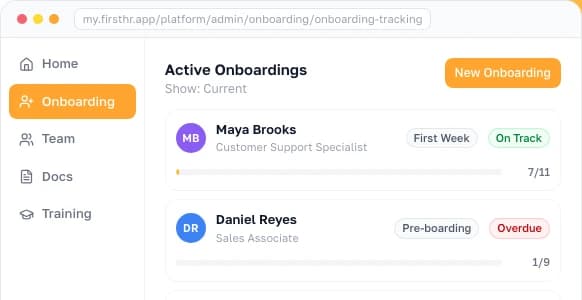
The map tells you what you believe is covered. The page below tells you whether it was: the first half is the redeployment question answered in advance, and the rest is what actually happened the last time work moved, including the number of working days it took.
Flexible Roles That Are Still Clear Roles
A flexible role is defined by the outcome it owns and the decisions it can make, not by a list of tasks. That distinction is what lets the work inside a role change without a renegotiation, and it is the difference between a role that flexes and a role that is simply vague.
Task-based roles break the moment priorities move, because anything not on the list reads as somebody else's job. Outcome-based roles absorb the same change quietly. Writing a job description around three outcomes rather than fifteen duties costs nothing and changes how the role behaves under pressure.
Vagueness is the failure mode on the other side. A role with no written scope does not flex; it collides. Two people duplicate the same work while a third thing goes undone, and everyone concludes the team needs a process when it needed a sentence.
| Element | Rigid version | Flexible but clear version |
|---|---|---|
| Scope | A list of fifteen recurring duties | Two or three outcomes the person is accountable for, with the duties treated as current means |
| Decision limits | Held in the founder’s head and applied inconsistently | Written as three lists: decide alone, decide after a conversation, needs approval |
| Secondary area | Undefined, so help is negotiated case by case | One named area the person is the backup for, refreshed on a schedule |
| Change to the work | Reopens the whole role and often the pay conversation | Expected, discussed in the regular one-on-one, and recorded on the role document |
| Reassignment | Requires the founder to broker every handover personally | The receiving person already knows the outcome and where the instructions live |
The secondary area is the row that does the most work. When every role carries one named backup responsibility, coverage stops being a project and becomes a property of your org design. It also gives people a legitimate reason to learn something adjacent, which is the part employees usually want anyway.
Decision limits belong in writing for the same reason. Employee empowerment is not a sentiment here; it is the mechanic that lets work continue while you are in a meeting, on a plane, or thinking about something else.
Cross-Training Is the Engine, Not the Goal
Cross-training builds the coverage that agility depends on, which makes it a means rather than an objective. Aim it at the specific gaps your coverage map exposed instead of spreading it evenly across the team, because broad versatility is expensive and mostly goes unused.
The mechanics matter more than the intent. A person who watched a walkthrough has seen a process; a person who ran it live under observation can run it. Cross-training employees works when the trainee holds the keyboard and the expert sits on their hands, and it decays when the skill is never used again.
| Method | What it produces | Best used for | Time cost per person |
|---|---|---|---|
| Teach-back session | A recording, a rough procedure, and one more person who has seen the work | The first pass at an undocumented process | 60 to 90 minutes, once |
| Live run with the expert observing | Genuine coverage, plus a list of missing access and unwritten exceptions | Any process on the coverage map that has no tested backup | One full cycle of the process |
| Scheduled rotation | Coverage that stays current instead of decaying between uses | Processes that run weekly or monthly and matter every time | One cycle per quarter |
| Shadowing | Context and vocabulary, not capability | Onboarding, and understanding a function you will not perform | Two to four hours |
| Paired handover during absence | A tested backup and a documentation list produced under real conditions | Planned leave, which is the cheapest rehearsal available | The length of the absence |
A quarterly refresh is the part that gets skipped and the part that decides whether any of this survives. A training matrix makes the decay visible: when the last-performed date on a critical process passes six months, coverage is drifting back toward theory.
Formal job rotation is the heavier version of the same idea, and it fits businesses with repeatable operational roles better than it fits a team of specialists. Start with targeted pairs, and add rotation only where the work is genuinely interchangeable.
A 2017 SHRM case shows the heavier version at work: one legal services firm moved its HR staff through rotations at each office location and had them shadow colleagues in different functional areas. Its senior vice president of HR reported a significant drop in turnover inside the HR department after almost a year of data.
Continuous Learning Without a Training Budget
Continuous learning supports agility only when it is aimed at skills the business will actually need to redeploy. A general commitment to development produces courses nobody applies; a targeted one produces a second person who can run payroll next month.
The cheapest source of direction is a gap you can already see. A skills gap analysis against the coverage map tells you which four skills matter, and four is a manageable number for a small team in a quarter.
None of this requires a budget line. The three highest-yield formats at small scale cost time rather than money: the teach-back, where whoever owns a process explains it to one other person and the recording becomes the first draft of the documentation; the standing learning hour, protected on the calendar and defended like a customer meeting; and the write-up after any unusual case, filed where the next person will look.
That third one is where most of the value leaks. Knowledge captured in a conversation evaporates within weeks. The same knowledge written into a knowledge base is still there when someone new needs it, and it is what turns individual learning into organizational capability.
Structured upskilling deserves a place too, particularly where the gap is a real skill rather than a missing procedure. Just tie each one to a named coverage gap and a date, or it becomes the thing everyone means to do after the busy period ends.
A Replanning Rhythm Beats Being Permanently Interruptible
Agility comes from a scheduled moment when the plan is allowed to change, not from being available to change it at any time. Constant interruption looks responsive and produces the opposite: work that never reaches the point of paying off, and a team that stops investing effort in anything it expects to be cancelled.
| Horizon | What is allowed to change | What stays fixed | Who decides |
|---|---|---|---|
| Weekly | Task sequencing, who is covering what this week, immediate customer issues | The quarter’s goals and any commitment already made to a customer | The person doing the work, inside written limits |
| Monthly | Resourcing across projects, scope of work already in flight, dates that have slipped | The goals themselves, unless something genuinely material changed | Founder plus whoever owns the affected outcome |
| Quarterly | Goals, priorities, what gets dropped, where the next hire goes | Nothing. This is the meeting where everything is on the table | Founder, with the team informed of the reasoning, not just the result |
| On a real surprise | Anything, but through a named path rather than a group message | The commitment horizon for work already promised externally | Founder, with the trade-off written down and announced |
The fourth row is the one small businesses need most and define least. A genuine surprise deserves a fast path, and having that path published is what stops every ordinary request from being treated as one. Reserving roughly a fifth of capacity for unplanned work makes the arithmetic honest.
Quarterly goals give the rhythm something to hold on to. Whether you use OKRs or a plain list of three priorities matters far less than everyone knowing when the list is next open for revision.
Watch for change fatigue, which is what too much replanning produces. When new directions are announced more often than old ones are finished, people learn to wait them out.
How to Measure Workplace Agility
Three numbers tell a small business whether its agility is real: coverage ratio, decision latency, and time to redeploy. All three are countable by hand at small scale, and none requires a survey.
Decision latency is usually the fastest to improve, because the delay concentrates in one or two places. Track where the wait sits rather than the average alone. If most requests are waiting on the same person, the fix is a written limit that removes a whole class of decisions from their queue, not a reminder to answer faster.
Read all three against your own trend rather than an industry benchmark. On a team of twenty, one delayed project moves the numbers enough to look like a trend, so a rolling four-quarter view is the only one worth reacting to.
Perception is worth a fourth check if you have a survey habit already. Two questions cover it: can you get an answer when you need one, and could someone else run your main process if you were out for two weeks? The second question tends to produce a shorter list of covered processes than the coverage map claims, and the gap between those two lists is the most useful thing on this page.
Where Workplace Agility Goes Wrong
Most failed agility efforts break in one of six recognizable ways, and most of them come from adopting a practice without building the condition underneath it.
| Mistake | What it looks like | The fix |
|---|---|---|
| Adopting ceremonies instead of capabilities | Daily standups and sprint boards on a team of nine, with the same approval bottleneck as before | Build coverage and decision rights first; add ritual only where the work genuinely resembles software delivery |
| Confusing flexibility with agility | Remote days and flexible hours offered while reassigning a project still takes three weeks | Ask the redeployment question directly: could two people move onto something new next Monday, and what would stop |
| Cross-training everyone on everything | A large training push, thin skills across the board, and the same critical gaps still open | Aim cross-training at the specific single points of failure on the coverage map |
| Treating documentation as optional | A backup exists and still needs the primary owner on the phone to complete the process | Produce documentation as a by-product of the teach-back, and date it against the last real change |
| Replanning constantly | New priorities announced weekly, initiatives started more often than they are finished | Publish a commitment horizon and a named path for genuine surprises |
| Agility that stops at the founder | The team can act fast until any decision needs a yes, and then everything queues in one place | Move whole classes of decisions below you in writing, with limits stated as numbers rather than feelings |
The last one is worth sitting with. Founders reliably describe their company as agile while every meaningful decision routes through them, because from the inside that arrangement feels fast. Measure decision latency for a month and it stops feeling that way.
Where a whole function rests on one person, the longer-term answer is succession planning rather than a backup rota. Coverage handles a two-week absence. It does not handle a resignation from the only person who understands your largest account.
Frequently Asked Questions
What is agility in the workplace?
Agility in the workplace is an organization’s ability to change what people work on, and how they work, faster than conditions change around it, without losing quality or burning the team out. It is a standing capability rather than a mood. Four things produce it: coverage, meaning more than one person can run the work that cannot pause; written decision rights, so people can act before the founder is free; current documentation, so a process can be handed over rather than only performed; and a scheduled replanning rhythm, so changing the plan is a normal event. A company with all four can absorb a lost customer, a sudden opportunity, or a two-week absence without a crisis. A company relying on individual willingness to work harder has enthusiasm, which is not the same thing and does not survive a second consecutive surprise.
What is the difference between workplace agility and workplace flexibility?
Workplace flexibility is about when and where individuals work. Workplace agility is about how fast the organization can move its people and priorities. Flexibility is an arrangement offered to an employee: remote days, shifted hours, compressed schedules. Agility is a property of the company: the speed at which work can be reassigned when something changes. The two are independent. A fully remote company with flexible hours can still take three weeks to reassign a project because only one person knows the process and nobody can approve the switch. An on-site business with fixed shifts can move a person onto new work the same afternoon because coverage is mapped and the limits are written down. Flexibility improves the employee experience. Agility improves the company’s response time. Most small businesses need both, and confusing them wastes effort on the one that was never the constraint.
Is agile the same as agility at work?
No. Agile with a capital A is a specific family of software development methods built on short iterations, small cross-functional teams, and frequent customer feedback, and it arrived in general management through that route. Agility at work is the broader organizational capability to respond to change quickly, and it does not require sprints, standups, story points, or any named ceremony. Small businesses get into trouble when they adopt the vocabulary and skip the substance: a daily standup on a team of nine adds a meeting without adding coverage or clearing a single approval bottleneck. Take the useful parts, which are short planning horizons, work broken into pieces small enough to finish, and a scheduled moment to change direction. Leave the ritual unless your work genuinely looks like software delivery.
How do you improve agility in a small team?
Start with coverage, because it is the constraint almost every small team hits first. List the processes that cannot pause for two weeks, name a backup for each, and have that backup run the process live once so the coverage is real rather than theoretical. Then write down decision rights: which calls each person makes alone, which need a conversation, which need approval and from whom. Third, put a replanning moment on the calendar so priorities change on a known date instead of arriving as interruptions. Cross-training and continuous learning support all three, but they work best when aimed at the specific gaps the coverage map exposed rather than spread evenly across the team. Expect this to take a quarter, not a week, and expect the documentation step to be the one people quietly skip.
How does cross-training support workplace agility?
Cross-training is the mechanism that creates coverage, and coverage is what makes redeployment possible. Without a second person who can run a process, moving someone onto new work means stopping the old work entirely, so the plan change gets postponed until it is no longer useful. The version that works at small scale is narrow and targeted: cross-train against the specific single points of failure identified on a coverage map, not across the whole team in a general push for versatility. Two rules keep it honest. The trainee performs the process live under observation rather than watching someone else do it, and they repeat it at least once a quarter, because an unused skill degrades faster than most founders expect. Teaching also produces the documentation, since anyone explaining a process out loud is one recording away from a written procedure.
How do you measure workplace agility?
Three numbers cover it for a small business. Coverage ratio is the share of critical processes that have a backup who has run the process live. Decision latency is the median number of working days between a decision being requested and an answer arriving. Time to redeploy is the number of working days from deciding to move someone onto new work to their first useful output. Track all three against your own trend rather than a benchmark, because published averages come from samples where one project is a rounding error. Decision latency is usually the fastest to improve and the most revealing, since the wait almost always concentrates on one or two approvers. If you only have appetite for one measurement, use time to redeploy, recorded after any real reassignment, planned or forced.
Can a company be too agile?
Yes, and the failure mode is change fatigue rather than excessive speed. When priorities move every week, nothing reaches the point where it produces a result, people stop investing effort in work they expect to be cancelled, and the team learns to wait out new directions instead of acting on them. The symptom is easy to spot: initiatives are announced more often than they are finished. Real agility includes a commitment horizon, which is the period during which the plan is deliberately left alone. On a small team, a quarter is usually right for goals and a week for task-level sequencing. Reserving a small share of capacity for genuine surprises protects both sides, because it lets you say yes to something new without reopening everything already in flight.
Make HR the easy part of running your business
Onboarding, e-signatures, training and core HR in one place. Up and running in 5 minutes.
- 7-day free trial
- No credit card required
- Cancel anytime